

It’s 2026. We might not have flying cars in every driveway yet, but the digital landscape? It’s moving faster than a hyperloop. Artificial Intelligence isn’t just a buzzword anymore; it’s the engine room of the internet. Virtual Reality is creeping into our shopping habits, and the algorithm knows what you want for dinner before your stomach even grumbles.
Yet, despite all this flashy tech and “next-gen” evolution, I still see businesses making the same fundamental fumbles they were making five years ago. It’s frustrating, isn’t it? You pour money into ads, churn out content, and tweak your website, but the needle just… wiggles.
If you’re feeling like you’re running on a treadmill sweating buckets but getting nowhere you might be guilty of one of these common digital marketing mistakes. But hey, don’t beat yourself up. We’ve all been there. The important thing is spotting the leak in the hull so you can patch it up and get back to smooth sailing.
Let’s explore into the biggest pitfalls businesses are still stumbling into this year and, more importantly, how to fix them.
1. The “AI Autopilot” Trap (Or: Letting the Robot Drive the Car)
Look, I love AI. Tools like ChatGPT and Gemini have revolutionized how we work. But here’s the mistake I see way too often: business owners treating AI like a “set it and forget it” magic button.
They generate 50 blog posts in an hour, slap them onto their website, and wait for the traffic to roll in. Spoiler alert: It won’t.
Think of AI as a sous-chef. It can chop the onions, prep the stations, and get the stock simmering. But if you leave the kitchen and let the sous-chef run the dinner service alone? You’re going to end up with a bland, robotic meal that lacks soul.
Google’s algorithms in 2026 are smarter than ever. They can smell generic, AI-generated content from a mile away. If your articles sound like a Wikipedia entry written by a committee of robots, your readers (and search engines) will bounce faster than a rubber ball.
The Fix: Use AI for brainstorming, outlining, and drafting, but inject your human experience. Add personal anecdotes, specific examples, and a unique brand voice that a machine just can’t replicate.
2. Ghosting Your Mobile Users
You’d think by 2026 we wouldn’t need to have this conversation, right? But you’d be shocked at how many business owners still review their new website designs exclusively on a 27-inch desktop monitor.
Here’s the cold, hard truth: Your desktop site is the secondary version. The primary version is the one in your customer’s pocket.

If your “Contact Us” button is impossible to tap with a thumb, or if your beautiful high-res hero image takes four seconds to load on a 5G connection, you have lost that customer. We call this “friction.” And in the digital world, friction is the enemy of revenue.
Ignoring Core Web Vitals Google’s metrics for how fast and stable your site is is like opening a physical store with a jammed front door. Sure, people could get in if they pushed hard enough, but why would they when the competitor next door has an automatic sliding door?
3. Treating SEO Like a Crockpot (Set It and Forget It)
I hear this all the time: “Oh, we did SEO back when we launched the site in 2024.”
That’s like saying, “I went to the gym once two years ago, why aren’t I fit?”
Search Engine Optimization (SEO) is not a one-time project; it is an ongoing ecosystem. The keywords that brought you traffic six months ago might be dead today. Competitors are constantly vying for your spot. Algorithms change. Search intent shifts.
One of the biggest blunders is ignoring the technical side of things. Are your meta tags updated? Is your schema markup helping AI understand your content? Are you fixing broken links? If you aren’t actively nurturing your SEO strategy, your rankings are slowly decaying.
The Fix: You need a monthly rhythm. Audit your content, refresh old articles, and keep building high-quality backlinks. Consistency beats intensity every single time.
4. Vanilla Branding in a Baskin-Robbins World
The internet is noisy. In 2026, it is deafening. With AI lowering the barrier to entry, there is a flood of content being published every second.
The mistake? Trying to appeal to everyone by being “safe.”
If your brand voice sounds exactly like your competitor’s, why should anyone choose you? “We provide high-quality solutions for your business needs.” Yawn. Wake me up when you say something real.
Businesses often fear being polarizing or too specific. They want the widest net possible. But when you speak to everyone, you speak to no one.
The Fix: Be bold. Have an opinion. If you offer custom web development, don’t just list features. Tell them why templates are a waste of money for serious brands. If you do digital marketing for small businesses, talk about the pain of wasted ad spend. Make them feel something.
5. Chasing Traffic Instead of “The Ask”
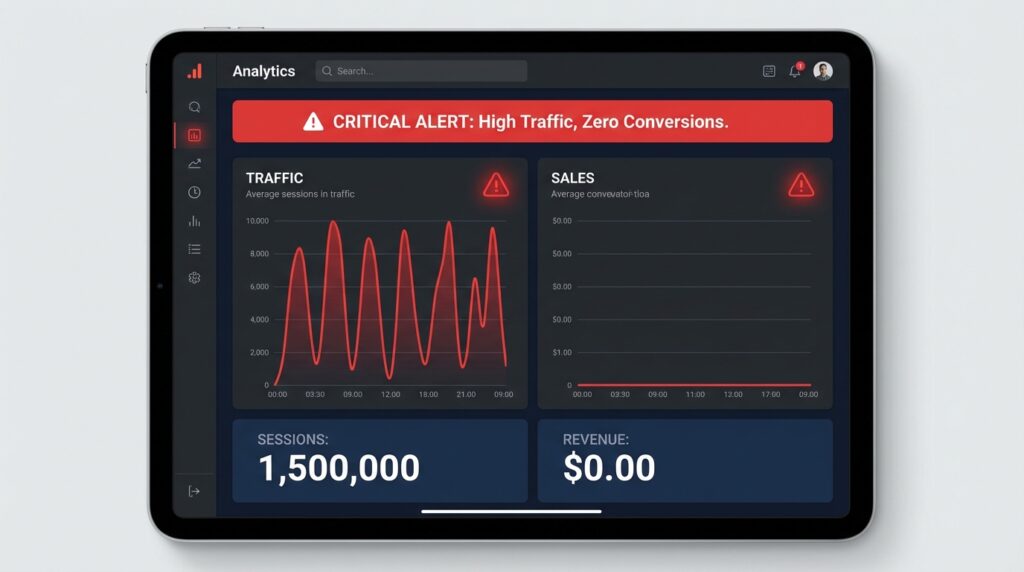
Traffic is a vanity metric. I can get you 10,000 visitors tomorrow if I write a clickbait article about a celebrity scandal. But will any of them buy your SaaS product or hire your consulting firm? No.
The mistake here is obsessing over the volume of keywords rather than the intent behind them.
Let’s say you sell high-end coffee machines.
- Ranking for “coffee” (High Volume) is useless. People searching that might want a cafe nearby, a history of beans, or a photo for a school project.
- Ranking for “best commercial espresso machine for small cafe” (Low Volume) is a goldmine.
Stop chasing the big numbers. Chase the wallet-out moments. Focus on transactional keywords and ensure your content actually answers the specific problem the user has.
6. The “Rental” Problem (Social Media vs. Owned Data)
“We have 50,000 followers on TikTok! We’re crushing it!”
That’s great. But what happens if TikTok gets banned? Or the algorithm changes (again) and your reach drops to zero?
Building your entire business on a social media platform is like building a house on rented land. The landlord can kick you out at any time.
Many businesses in 2026 are still neglecting First-Party Data. They don’t have an email list. They aren’t building a community on their own platform. They are feeding the social media giants without securing their own future.
The Fix: Use social media as a funnel, not a parking lot. Every post, every video, every tweet should eventually drive people to something you own your website and your email list.
7. Being a Robot on Social Media
Speaking of social media, are you “broadcasting” or “engaging”?
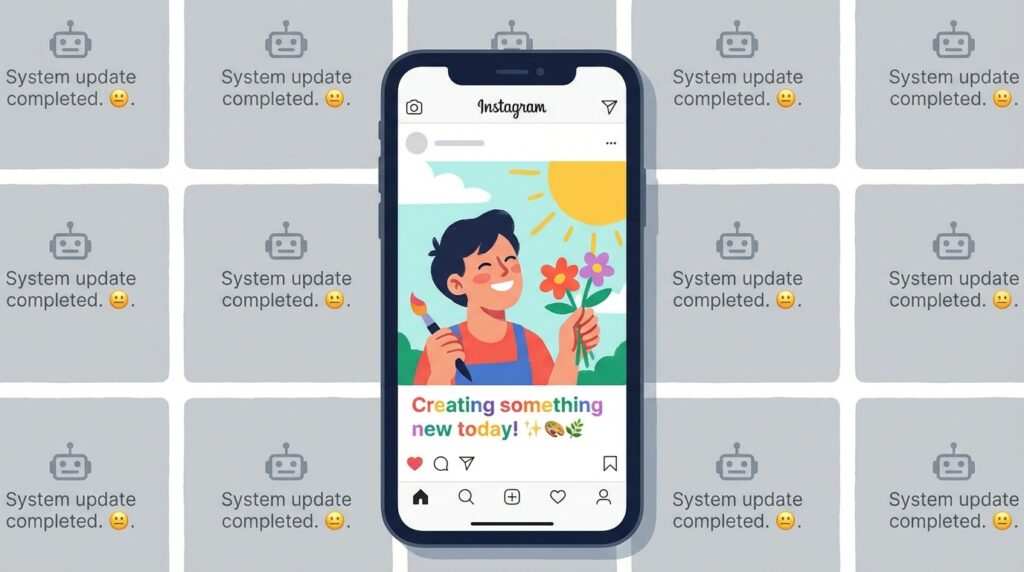
Broadcasting is posting a link to your new blog post and leaving. Engaging is asking questions, replying to comments, and actually being social.
People crave connection. In an AI-saturated world, human connection is the premium product. If your social feed looks like a bulletin board of ads, people will tune you out.
The Fix: Show the faces behind the brand. Show the messy desk. Share the failures along with the wins. People buy from people, not logos.
8. The Video Fear Factor
“We can’t do video; we don’t have a studio or a $5,000 camera.”
This excuse expired about five years ago. In 2026, raw, authentic content outperforms highly polished commercials on almost every platform.
Consumers are skeptical of “perfect.” Perfect looks like an ad. An ad means you want my money. But a shaky iPhone video of the CEO explaining a concept or a developer walking through a bug fix? That feels real. That builds trust.
If you aren’t leveraging video whether it’s short-form (Reels/Shorts) or long-form education you are fighting with one hand tied behind your back.
9. Ignoring the “Local” Guy (Local SEO)
If you are a service business plumber, dentist, lawyer, even a digital agency and you aren’t optimizing for Local SEO, you are leaving money on the table.
“Near me” searches have evolved. People now search for “best [service] near me open now” or “[service] with 5 star reviews.”
Neglecting your Google Business Profile is a cardinal sin. Is your address current? Are you responding to reviews (even the bad ones)? Are you posting updates there?
The Fix: Treat your Google map listing like a second homepage. It’s often the first thing people see before they even click your website link.
10. Data Rich, Insight Poor
We have so much data in 2026 it’s overwhelming. Google Analytics 4, Search Console, social insights, CRM data…
The mistake isn’t a lack of data; it’s a lack of insight.
Business owners look at a dashboard, see “User Retention” is down, panic, and change their whole strategy. They don’t dig into why. They don’t segment the data. They look at “Averages,” and averages are liars.
The Fix: Stop looking at vanity metrics (Likes, Pageviews). Start looking at business metrics (Cost Per Acquisition, Lifetime Value, Conversion Rate). If you don’t know how to read the story the data is telling you, hire someone who does.
Final Words
Digital marketing in 2026 isn’t about chasing the shiny new object. It isn’t about tricking the algorithm or using the fanciest AI tool. It’s about fundamentals. It’s about understanding who your customer is, where they hang out, and what keeps them up at night. It’s about building a website that is fast, helpful, and easy to use. It’s about creating content that actually answers questions instead of just filling space. If you can avoid these common mistakes if you can be human in a world of robots, and helpful in a world of noise you won’t just survive. You’ll thrive.